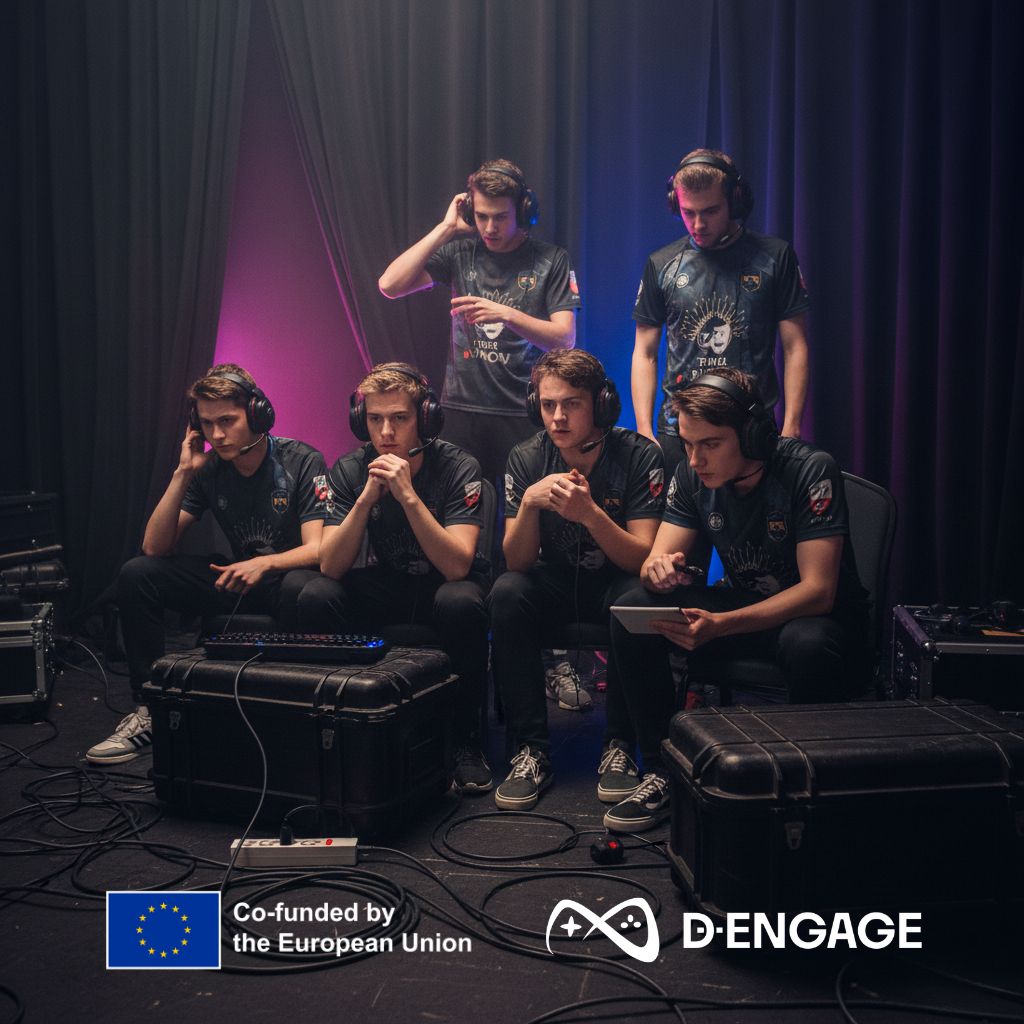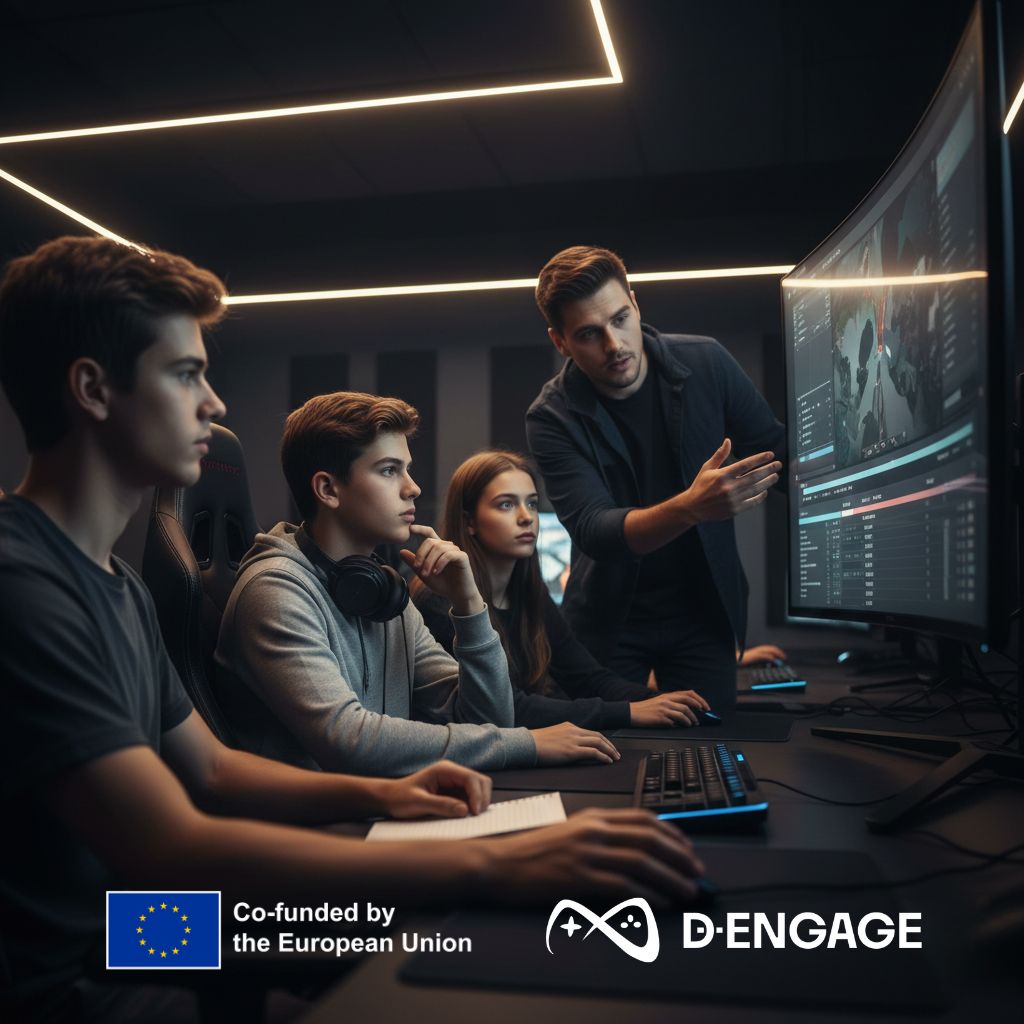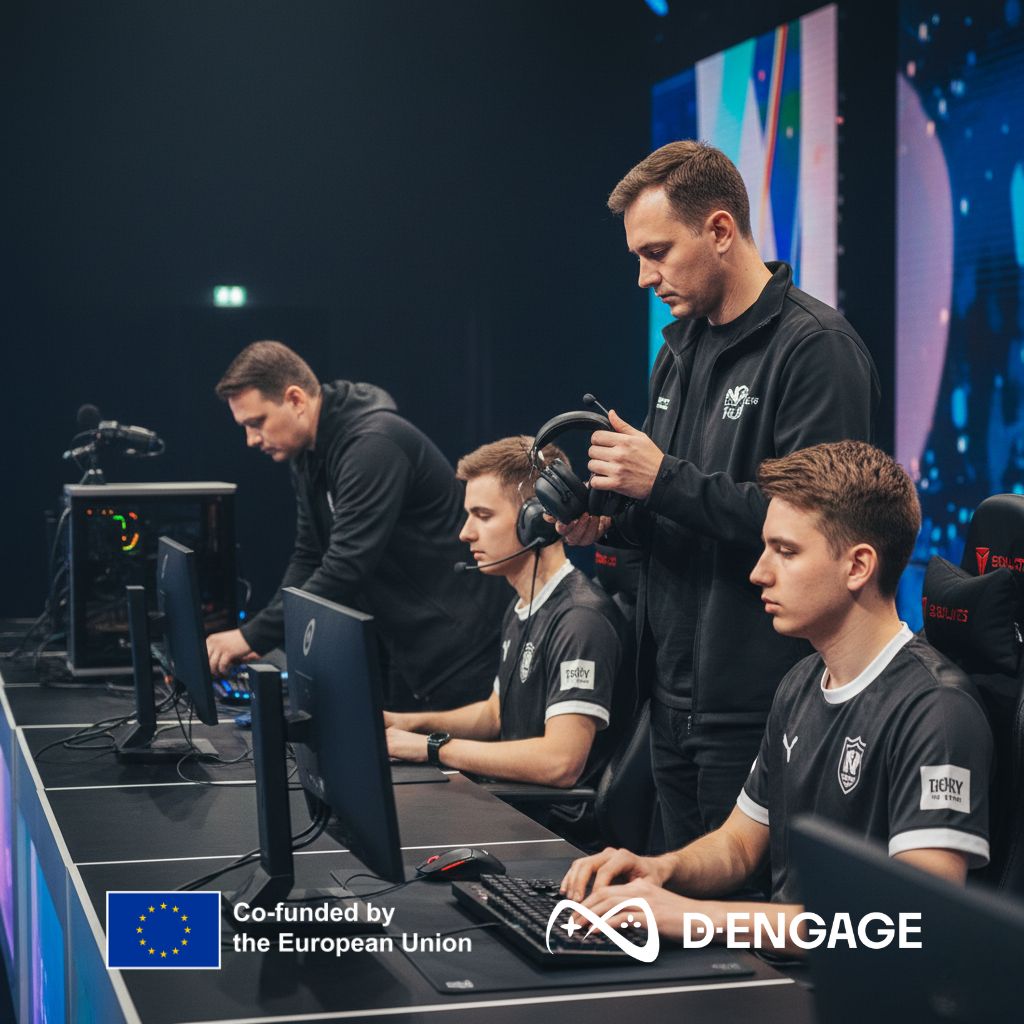
In youth work, “raising an esports player” should not sound like building an elite athlete. It is not about pushing performance at any cost. It is about helping young people develop healthy habits, self-regulation, and supportive routines around an activity they already care about.
Most concerns you will hear from parents, colleagues, or young people themselves are not really about esports. They are about sleep, posture, mood, time balance, online stress, and whether gaming is helping or harming everyday life. The good news is that youth workers can address these issues without becoming health experts—through simple structures and consistent messages.
Go to Module 5 on the platform: portal.d-engage.eu
What “raising an esports player” means in youth work
In a youth work setting, “raising” is closer to supporting: supporting young people to participate in esports in a way that strengthens wellbeing, relationships, and agency. Your role is to make the environment healthier than the default online experience.
That starts with shifting the conversation away from “screen time” as a moral debate and toward questions youth workers can actually work with: Are routines stable? Is participation respectful? Is the young person coping well with competition? Do they recover after intense play? Do they know when to step back?
Measuring progress responsibly (simple, youth-friendly metrics)
Measurement is useful when it helps learning, not when it increases pressure. In esports activities, keep metrics light and meaningful. Instead of ranking young people against each other, track progress against themselves and against agreed behaviours.
A practical approach is to measure one skill and one habit at a time. For example: “clear communication” as the skill, and “take breaks” as the habit. The goal is to make improvement visible without creating a performance treadmill.
Ergonomics and movement: prevention that actually sticks
Young people rarely change posture because an adult tells them to. They change when it becomes part of the routine and when it is framed as a performance and comfort advantage: fewer headaches, less wrist strain, more consistent focus.
In youth settings, the most effective approach is small and repeatable: a quick desk check, a short mobility routine, and clear permission to pause. You can normalise “micro-breaks” as part of the culture especially during longer sessions or events.
Nutrition and hydration: low-cost habits for stable focus
You do not need to lecture about diet. What helps is practical swaps that support concentration and mood. Hydration is often the easiest win: many young people simply forget to drink water, then feel tired or irritable and blame the game.
Food is similar. The aim is not perfection; it is stability. Encourage snacks that do not spike and crash energy, and build small habits around breaks rather than constant grazing.
A lightweight weekly “healthy performance” checklist
Use this once a week with a group, or as a quick self-check. Keep it non-judgemental:
- Sleep and recovery: “Am I coming into sessions rested enough to focus?”
- Body care: “Did I do breaks and a short stretch routine?”
- Hydration: “Did I drink water during play?”
- Mood and stress: “Am I getting stuck in anger or can I reset?”
- Balance: “Did esports fit into my week, or take it over?”
This creates a shared language that supports wellbeing without shaming.
Try this: Reaction Time Baseline + Warm-Up Comparison (10 minutes)
At the start of a session, do a quick reaction-time test (simple online tools or a basic phone-based test). Then run a 3–4 minute warm-up: shoulder rolls, wrist circles, neck mobility, and deep breaths. Test reaction time again.
The point is not perfect accuracy; it is to make one message tangible: preparation and recovery improve performance and wellbeing. Young people tend to adopt habits faster when they can feel the difference.
Co-Funded by the European Union. Views and opinions expressed are however those of the author(s) only and do not necessarily reflect those of the European Union or the Foundation for the Development of the Education System (FRSE). Neither the European Union nor FRSE can be held responsible for them.