A youth esports event does not need a stage, sponsors, or professional casters. What it needs is structure: a format that fits your setting, a plan that prevents chaos, and safeguards that protect young people while keeping the experience fun.
This module is about moving from “let’s do something with gaming” to “we ran an event that worked, and we could do it again.”
Go to Module 4 on the platform: portal.d-engage.eu
Choose the right format (start smaller than you think)
Most youth organisations start too big and then get overwhelmed. A better approach is to match format to your goals and capacity. Think in terms of an “entry ladder” you can repeat and scale:
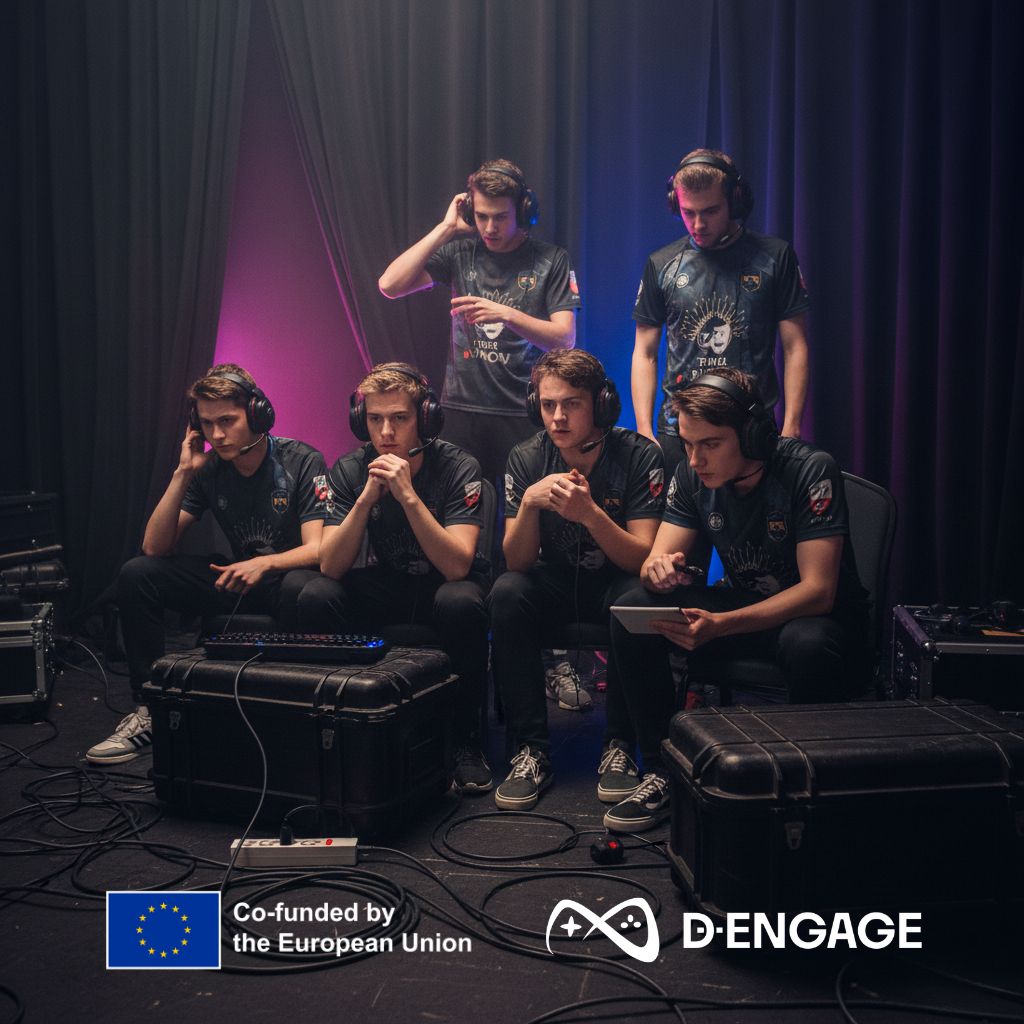
- Watch party + discussion: low-risk, great for norms, reflection, and inclusion
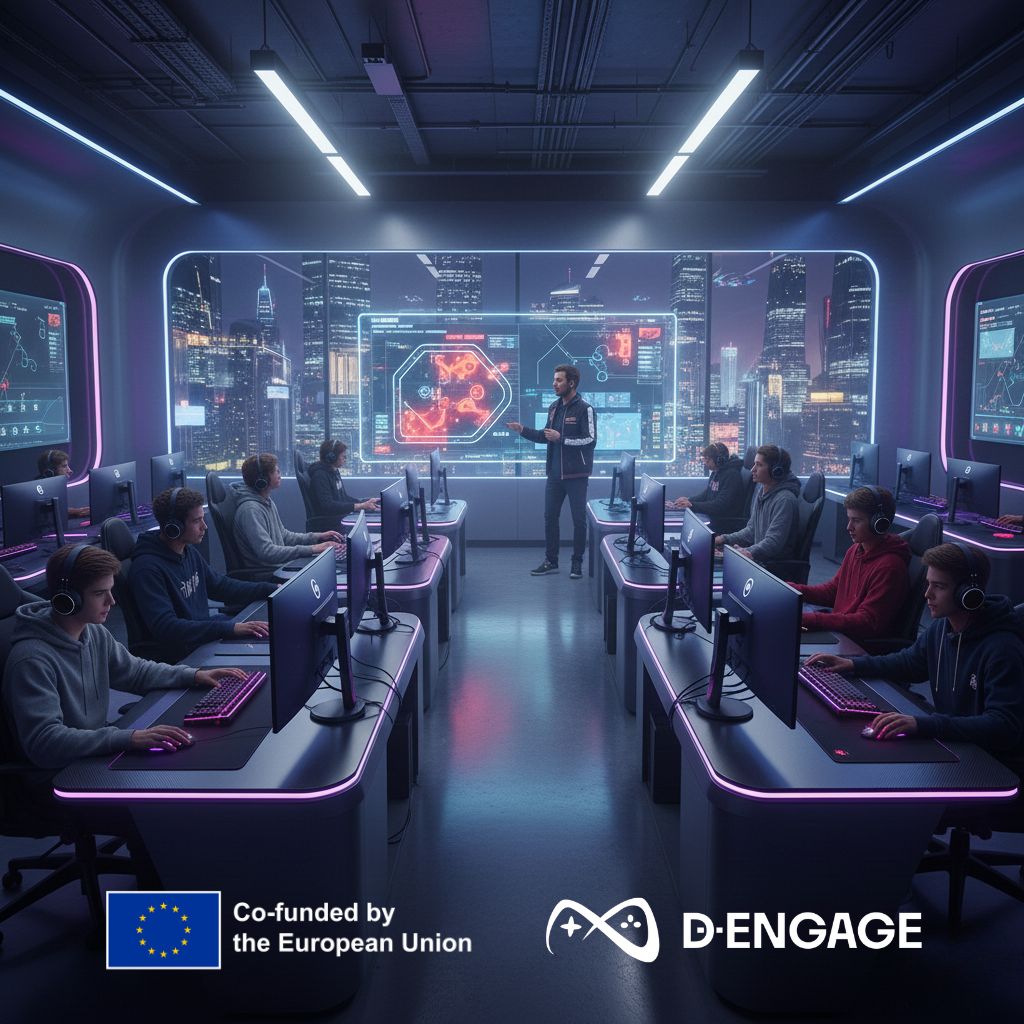
- LAN boot-camp / workshop day: skill-building + teamwork, easier supervision
- Online mini-league: higher commitment, more logistics, strong for routine and progression
If your goal is community and inclusion, a watch party with structured roles can be more effective than a tournament. If your goal is skill progression, a boot-camp format often works better than a one-off competition.
Planning basics: what prevents chaos
Esports events fail for boring reasons: unclear roles, unclear schedules, and no buffer time. You do not need a long project plan, but you do need a few essentials.
Start by naming three roles even if you are a small team: (1) facilitation and culture (norms, behaviour), (2) technical/logistics (devices, accounts, platforms), and (3) safeguarding lead (who handles issues and escalation). If you are alone, you still wear these hats just make it explicit.
Then build a simple timeline that includes “hidden time”: setup, onboarding, breaks, and a short debrief at the end. The debrief is where youth work value often appears without it, the event becomes “just play.”
Budgeting and sponsorship (keep it youth-appropriate)
Budget does not have to mean money; it can mean choices. Start from zero and list what you can do with what you already have: devices, space, internet, staff time, and partnerships.
If you seek support, keep it credible and aligned with youth work values. Small local sponsorships (snacks, prizes that are not high-value, venue support) are usually safer than anything that pushes commercial pressure or excludes participants. Your event should feel like a youth activity, not a marketing channel.
Registration and safeguarding (practical lens)
Registration is not just a form it is your first safeguarding tool. Decide what data you truly need and avoid collecting what you do not. Make consent and privacy clear, especially around usernames, photos, streaming, and sharing results.
Fairness also needs attention. Make participation accessible through multiple roles (player, team captain, referee/moderator, organiser, content/reporting role). This helps include young people who may not want to compete directly but still want to belong.
Try this: the “Pick-Your-Path Plan” (15 minutes)
Plan next month’s activity using five lines:
- Format: watch party / boot-camp / mini-league
- Purpose: one sentence learning goal (e.g., teamwork, fair play, digital safety)
- Roles: who does facilitation, tech, safeguarding
- Safeguards: 3 rules + what happens if they are broken
- Debrief: 3 reflection questions you will ask at the end
If you can fill those five lines, you are ready to run something realistic.
Co-Funded by the European Union. Views and opinions expressed are however those of the author(s) only and do not necessarily reflect those of the European Union or the Foundation for the Development of the Education System (FRSE). Neither the European Union nor FRSE can be held responsible for them.