Esports is often discussed as if it is either “the future of sport” or “a waste of time.” In youth work, that framing is not very helpful. What matters is this: esports is a structured form of competitive gaming, and when it is facilitated with clear goals and boundaries, it can become a strong setting for non-formal learning.
This article gives you a shared starting point: what esports is, how it differs from “gaming,” which game types exist, and who shapes the culture young people experience.
Go to Module 1 on the platform: https://portal.d-engage.eu
What esports is (in plain language)
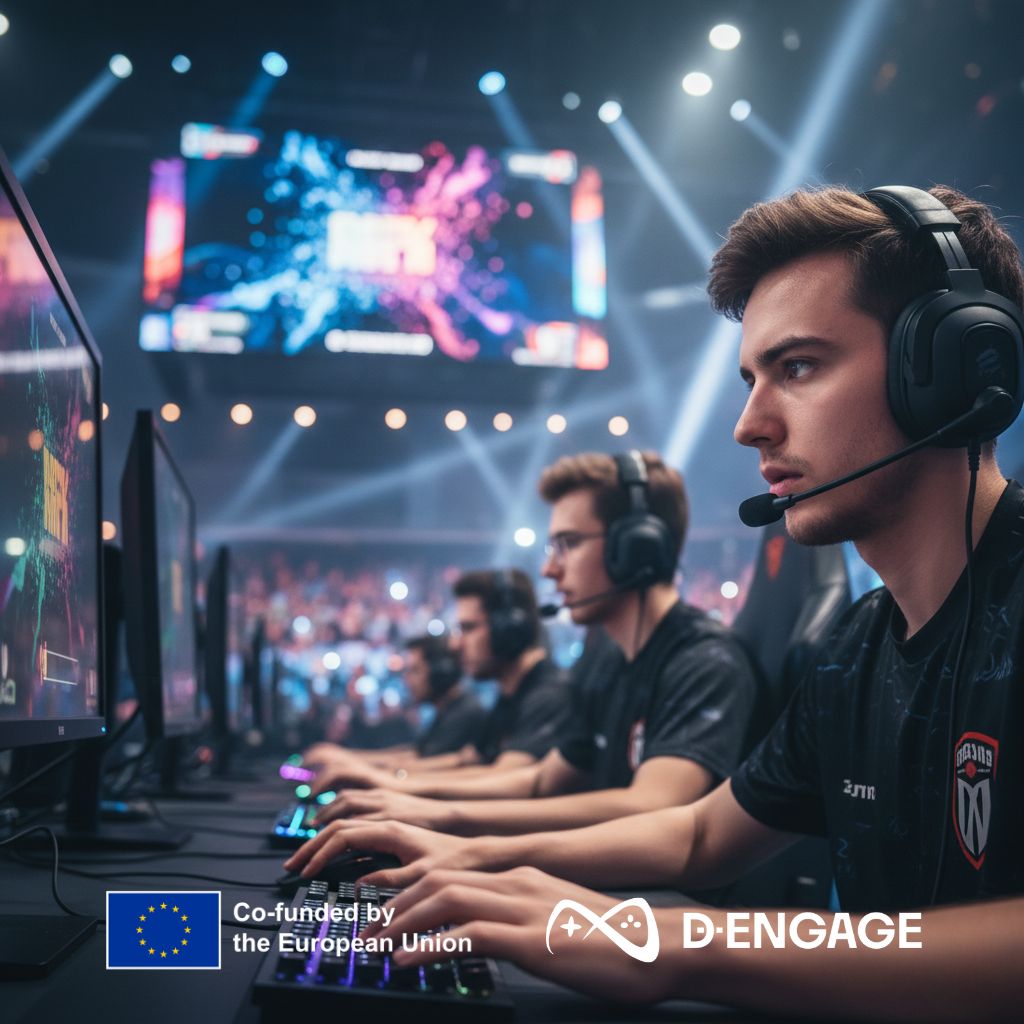
Esports refers to organised, rules-based competitive video gaming usually played in teams or ranked formats, often with coaching, training routines, and tournament structures. The key word is organised. A young person playing casually after school is gaming. A group training for scrims, competing in a league, or preparing for a tournament is closer to esports.
In youth work terms, esports is best understood as a container: it is a setting where you can intentionally work on teamwork, communication, self-regulation, inclusion, and digital citizenship if you design it that way.
Why it matters in youth work
Esports is not automatically “good.” Its value depends on facilitation. But it offers youth workers something many activities struggle to deliver: high motivation plus real-time social interaction in a digital environment young people already care about.
That combination creates teachable moments around group norms, leadership, fairness, conflict, wellbeing, and identity. It can also offer an entry point for young people who do not always feel reached by traditional activities especially when participation is designed to include multiple roles, not only “top players.”
Genres: choosing game types based on learning goals
Different game genres naturally encourage different skills. A simple way to choose is to start with your learning goal, then match the genre.
- Team coordination and communication: MOBAs (e.g., role-based teamwork, strategy under pressure)
- Focus, calm decision-making, and clear comms: Tactical shooters (tight roles, fast feedback loops)
- Inclusion and low barrier entry: Sports simulations or party-style competitive games (familiar rules, easier onboarding)
- Strategic thinking and planning: RTS/strategy formats (longer decision cycles, systems thinking)
You do not need to be a “game expert” to do this well. You need to be clear on the purpose of the activity, then choose a game type that supports it.
The esports ecosystem: who shapes what young people experience
One reason esports culture can change quickly is that many actors influence it at once. In simple terms, the ecosystem includes:
- Publishers (they own the game, rules, and often competition structures)
- Platforms (where play, streaming, and community interaction happen)
- Tournament organisers and leagues (formats, eligibility, codes of conduct)
- Teams, coaches, and influencers (role models, norms, language, behaviour)
For youth workers, this matters because the “culture” young people bring into your space is often imported from these environments. Your role is to translate that culture into youth work values: respect, inclusion, safety, and learning.
Try this: a 20-minute “Esports vs Sport” activity
Use this as a conversation starter with a group (or colleagues). Split into pairs and ask them to complete two columns: “Same as sport” and “Different from sport.” Then prompt:
- What makes competition feel fair in each setting?
- What behaviours do we want to reward here?
- What rules would make this safer and more inclusive for everyone?
Close by agreeing 2–3 group norms you will test in the next session.
Co-Funded by the European Union. Views and opinions expressed are however those of the author(s) only and do not necessarily reflect those of the European Union or the Foundation for the Development of the Education System (FRSE). Neither the European Union nor FRSE can be held responsible for them.